Change formulation or route without losing exposure
- Delivery
- Up to 6 weeks from a clean dataset
- Price
- Fixed, quoted after the call
- Typical model risk
- Medium
What is at stake
A new formulation or route can open a market or rescue a schedule. The risk is an exposure mismatch that only shows up in patients.
Question of interest
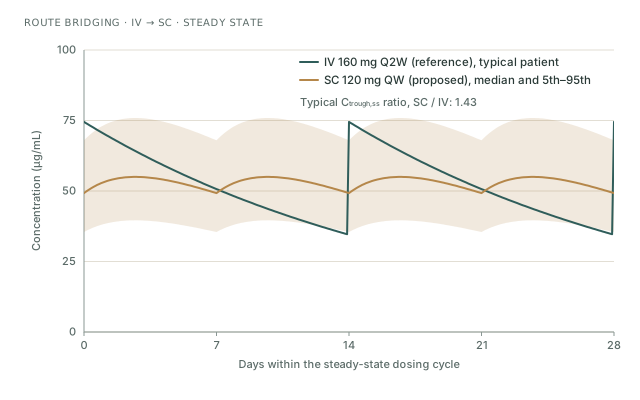
Does the new formulation or route give exposure comparable to the reference, and at what dose?
A population PK model on pooled data from both formulations or routes estimates relative bioavailability and absorption. Simulations compare exposure metrics between the reference and proposed regimens, supporting dose selection for the new formulation or route.
What reviewers will ask
Which exposure metric drives efficacy and safety?
Matching targets the metric linked to response under the reference regimen. The others are reported too.
Is the absorption model supported by data?
Absorption is estimated from observed data for the new formulation or route, not assumed.
Does the match hold across the population?
Exposure is compared across body weight and other covariates, not only for a typical patient.
What you file with the agency
- Dose rationale for the new formulation or route
- Population PK report with relative bioavailability, and M15 assessment table
- Simulated exposure comparison against the reference regimen
What we need from you
- PK data for the reference and new formulation or route
- Formulation details and any dissolution data
- The exposure-response evidence for the reference regimen, if available
What it may replace
When overlapping exposure data already exist, the analysis can reduce or replace a dedicated relative bioavailability study. Where it cannot, it sizes and designs that study.
Is this the decision in front of you?
Fixed price, paid in two milestones. A guaranteed date. Agency questions on this analysis answered at no extra cost. Pricing · How we work