Make the QT case from Phase 1 data
- Delivery
- Up to 6 weeks from a clean dataset
- Price
- Fixed, quoted after the call
- Typical model risk
- Medium to high
What is at stake
A dedicated thorough QT study adds months and cost. When Phase 1 data are suitable, the ICH E14 Q&As (R3) allow concentration-QTc analysis to replace it. The 2022 E14/S7B Q&As describe how nonclinical data support the case when high exposures cannot be covered.
Question of interest
Can the QT assessment rely on concentration-QTc analysis of Phase 1 data instead of a dedicated thorough QT study?
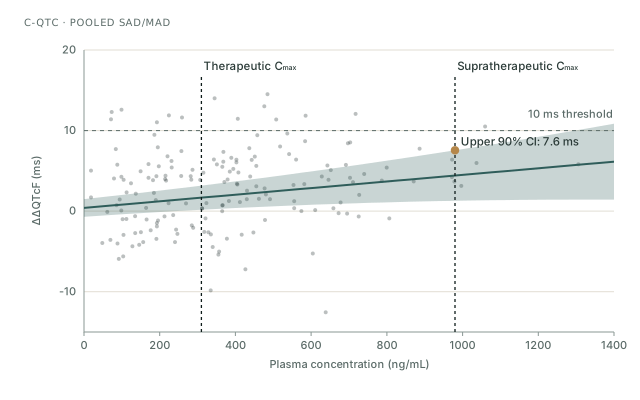
A pre-specified linear mixed-effects concentration-QTc model, fitted to SAD/MAD ECG and PK data, estimates the QTc effect at therapeutic and high clinical exposures. It serves as the primary QT assessment, with nonclinical S7B data integrated where the E14/S7B Q&As apply.
What reviewers will ask
Do Phase 1 exposures cover the high clinical exposure scenario?
We check coverage at scoping against the expected DDI and organ-impairment exposures. If it falls short, you hear it before the analysis is commissioned.
Is there hysteresis, or a heart-rate effect?
Both are assessed before the model is fitted, and the model is adapted if the data call for it.
Was the analysis pre-specified?
The analysis plan is fixed before unblinding where possible, and every deviation is reported with its reason.
What you file with the agency
- Concentration-QTc report and CSR section
- QT summary for the briefing document
- Request to replace the TQT study, with its supporting analyses
- Analysis datasets and code
What we need from you
- Time-matched ECG and PK data from SAD/MAD or another Phase 1 study, with placebo
- The ECG core-lab specification and data transfer agreement
- The expected therapeutic dose and known sources of high exposure (DDI, organ impairment)
What it may replace
A thorough QT study, when Phase 1 exposure covers the high clinical exposure scenario and the analysis meets the ICH E14 Q&A criteria. The agency decides on the waiver.
Is this the decision in front of you?
Fixed price, paid in two milestones. A guaranteed date. Agency questions on this analysis answered at no extra cost. Pricing · How we work