Dose children with less pediatric data
- Delivery
- Up to 6 weeks from a clean dataset
- Price
- Fixed, quoted after the call
- Typical model risk
- High
What is at stake
Pediatric studies are slow to enrol and costly per patient. When disease and response are similar enough, extrapolation lets exposure matching carry much of the evidence. The dose then has to be right the first time.
Question of interest
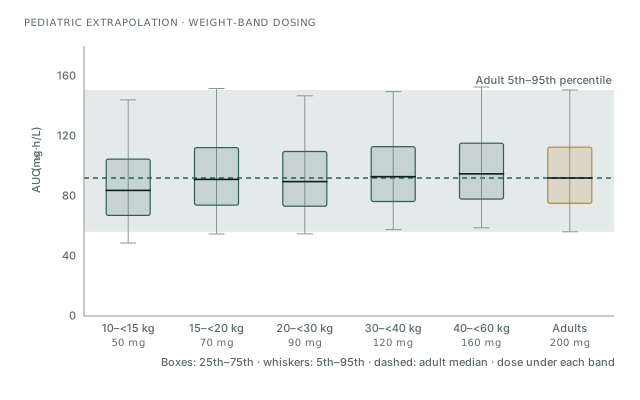
Which doses in children achieve exposures matching adults, and how much pediatric efficacy data is needed?
A population PK model with allometry and maturation, built on adult data and any pediatric data available, predicts exposure by weight and age band. It supports dose selection, sampling design and the quantitative part of the extrapolation concept and plan.
What reviewers will ask
Is maturation of clearance handled for the youngest children?
Maturation functions are included for the relevant pathways, with their uncertainty shown, not assumed away.
Is the adult exposure target the right one?
The target comes from the adult exposure-response evidence and is defined before any pediatric simulation.
Will the sampling design estimate the parameters that matter?
Designs are evaluated for parameter precision before the protocol is finalized.
What you file with the agency
- Quantitative sections of the PIP or iPSP
- Pediatric dose rationale for the protocol and briefing document
- Population PK report with maturation, and M15 assessment table
- Sampling-design justification
What we need from you
- Adult PK data and the adult exposure-response evidence
- Any pediatric PK data, including from other indications
- The current PIP or iPSP and the agency feedback so far
What it may replace
Where the extrapolation concept holds, the analysis can reduce the size of pediatric efficacy studies or support a PK-based bridging study. The extent is agreed with the agencies.
Is this the decision in front of you?
Fixed price, paid in two milestones. A guaranteed date. Agency questions on this analysis answered at no extra cost. Pricing · How we work