Size the BE study before you run it
- Delivery
- Up to 6 weeks from a clean dataset
- Price
- Fixed, quoted after the call
- Typical model risk
- Low to high
What is at stake
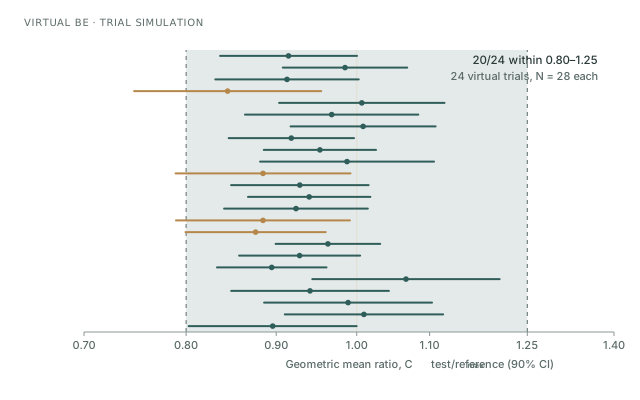
A failed BE study costs a development cycle. An oversized one costs money and volunteers. Simulating the study first shows the probability of success for each design and sample size.
Question of interest
Will the test product be bioequivalent to the reference, and what study design and size will show it?
Population PK or PBPK models of the reference and test products, informed by in vitro dissolution where relevant, simulate BE trials across designs and sample sizes. Used for design, model risk is low to medium. Used to support a waiver or an alternative BE approach, it is high, and the approach is discussed with the agency first.
What reviewers will ask
Is the within-subject variability realistic?
It comes from published or pilot data on the reference product, and we report how sensitive power is to it.
Is the in vitro to in vivo link validated?
When dissolution informs absorption, the link is checked against observed data before it is used to predict.
Is this a design aid or BE evidence?
The context of use says which. Using a model as BE evidence is discussed with the agency first.
What you file with the agency
- BE study design rationale and sample-size justification
- Modeling report and M15 assessment table
- Where relevant, the model-based approach proposed for agency discussion
What we need from you
- Formulation and in vitro dissolution data for test and reference
- Any pilot PK data
- The relevant product-specific guidance, if one exists
What it may replace
It can prevent an under- or over-sized BE study, and in some cases support discussion of an alternative BE approach. Whether model-integrated evidence can reduce a study is decided case by case with the agency.
Is this the decision in front of you?
Fixed price, paid in two milestones. A guaranteed date. Agency questions on this analysis answered at no extra cost. Pricing · How we work